
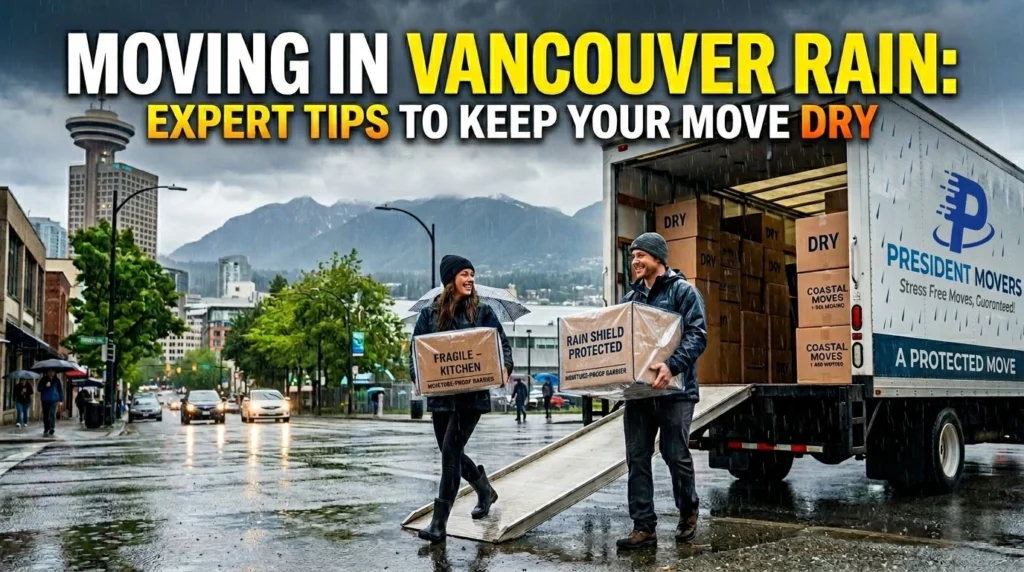
Rain is part of the deal in Metro Vancouver. If you are moving in the wet season, the question is not whether it will rain. It is how ready you are when it does. The good news is rain does not have to wreck your move. Having managed home moves across Metro Vancouver through everything from light drizzle to full atmospheric rivers. Our team at President Movers (proudly rated 4.9/5 based on 180+ Google reviews) presents this guide based on our field experience.
You cannot always wait for a dry day, but with the right supplies, a clear plan, and movers who work in this weather every week, we make sure your furniture stays dry, your floors stay safe, and the truck still pulls away on time. Leases end when they end, and sale closings land on a fixed date no matter the forecast.
Why Rain Can Complicate a Vancouver Move
Rain creates challenges that can quickly turn a simple move into a frustrating experience if you’re unprepared.
Common issues include:
- Wet cardboard boxes that weaken and collapse
- Water damage to furniture and mattresses
- Slippery stairs and walkways
- Mud and moisture tracked into homes
- Delays caused by poor visibility and traffic
- Increased risk of damaging electronics and documents
For homeowners and renters throughout Metro Vancouver, rain is often unavoidable. That’s why it’s important to plan ahead instead of hoping for perfect weather.
If you’re planning your relocation, our guide on moving costs in Vancouver can help you with the cost and the best time to relocate.
When Is Rain Most Common in Metro Vancouver?
According to Environment and Climate Change Canada, Metro Vancouver receives significant rainfall throughout the year, mainly between October and March.
Fall and Winter (October to March)
This is Vancouver’s wet season. November and December typically receive the highest rainfall totals, making them the most challenging months for moving. The advantage is that moving companies often have better availability during winter.
Spring (April and May)
Spring weather can be unpredictable. You may start your morning under clear skies and finish your move in the rain. Always keep waterproof supplies available, even if the forecast looks promising.
Summer (June to September)
Summer offers the lowest rainfall levels and remains the busiest moving season in Metro Vancouver. Families often move during school breaks, making it important to book movers in Vancouver well in advance.
Pro Tip: Check Environment Canada’s forecast the night before your move and again on moving morning. Vancouver weather can change quickly.
Essential Supplies for Moving in Rainy Weather
Having the right materials can make a significant difference when rain is expected. If you would rather keep costs down, our dollar-store moving hacks cover where to find cheap versions of most of these.
Stretch wrap
Industrial stretch wrap is the workhorse of a rainy move. Movers use industrial-grade stretch wrap to protect belongings from moisture during loading and unloading. You can get your furniture moved professionally anywhere in Greater Vancouver. You can buy it at Home Depot, Canadian Tire, U-Haul, and many dollar stores.
Heavy-duty contractor bags
Contractor bags do several jobs at once. Slip one over a box to shield it on the walk to the truck, or use one as a quick cover. Buy the thick contractor grade, not kitchen bags.
Tarps and drop cloths
Large tarps protect furniture inside the truck and can form a covered spot by the door. Drop cloths protect floors from wet boots and dripping boxes. Canvas drop cloths are better than plastic on busy paths.
Plastic bins
For your most valuable items, use a sealed plastic bin; they are waterproof, ensuring the contents stay completely dry. They are worth it for electronics, documents, photos, and anything you cannot replace. This matters most for apartment and condo moves in Vancouver, where a wait at the loading dock can leave items exposed.
Towels and waterproof pouches
Keep old towels handy to wipe down items as they enter the new home or truck. Small waterproof pouches or Ziploc bags are essential for keeping your phone, wallet, and moving day paperwork safe from the elements.
How to Protect Furniture During a Rainy Move
Furniture is the hardest thing to protect. Here is how we handle each type during moving jobs across the Lower Mainland.
Upholstered Furniture
Sofas, armchairs, and fabric headboards soak up water fast and can grow mold if they stay damp. Wrap them fully in stretch wrap before they leave the house, covering the base and legs.
Wood furniture
Water marks finishes, lifts veneer, and leaves rings on older pieces. Wrap furniture in moving blankets first, then cover with stretch wrap. Pay special attention to dining tables, dressers, and nightstands.
Mattresses and box springs
A soaked mattress can grow mold within a day or two. Mattresses should always be protected using mattress bags. Never leave a mattress uncovered in the rain, even for a minute.
Electronics and appliances
Keep electronics indoors until the last moment, and carry them into the new place first. Be sure to pack televisions, computers, gaming consoles, and monitors carefully in sealed boxes or original packaging. Our guide on how to move a 65-inch TV by yourself applies in wet weather.
How to Keep Moving Boxes Dry
Cardboard is the weak point in any wet move. Once it soaks through, a box can sag and drop its contents. A few habits keep them solid.
Reinforce the seams first
Add extra packing tape to the bottom seams before moving day, in an H shape across the centre and out to the edges. Use real packing tape, not masking or duct tape, which peels when wet.
Bag the tops
The simplest cover is a garbage bag pulled over the box while you carry it to the truck. Simply invert a heavy-duty garbage bag and slide it over the top of the box so it sheds water as you walk.
Set up a covered path
Park the truck so its back doors open near a carport, overhang, or covered garage. Many Vancouver buildings have covered loading areas, so check with your building manager first.
Work in batches and load smart
Move 5 to 10 boxes at a time instead of staging them all outside, and keep the staging area indoors. When you load, put boxes behind furniture; when you unload, bring boxes in last. Our trained loading and unloading crew follow this order on every wet-weather job.
Working With Your Movers on a Wet Day
When you book moves during rain, here is what a reputable company like President Movers brings. Our guide on whether it is cheaper to rent a U-Haul or hire movers is worth a read.
Professional crews typically bring:
- Moving blankets
- Stretch wrap
- Floor protection
- Waterproof coverings
- Safety equipment
- Weather-resistant loading procedures
At President Movers, every truck is equipped to handle wet-weather moves safely. Most homeowners discover that rainy conditions significantly increase the benefits of hiring experienced movers.
How Rain Can Affect Moving Costs and Timelines
Rain itself doesn’t increase moving rates. However, it can affect the overall duration of your move.
Common delays include:
- Slower loading times
- Extra wrapping requirements
- Reduced travel speeds
- Increased safety precautions
In our experience, rainy-day moves often take 15% to 25% longer than moves completed under ideal conditions. If weather creates challenges during long distance, our trusted long-range moving support can often help accommodate changing timelines.
What to Do After a Rainy Move
The job is not done when the truck leaves. A few steps now prevent damage later.
- Unpack and check boxes the same day. Even slightly damp cardboard can pass moisture.
- Inspect furniture, wipe wood dry, and pull the plastic off upholstery.
- Boost airflow with fans, open windows if it is drier outside, and run a dehumidifier in the room.
- Wait 24 to 48 hours before plugging in any electronics that got damp.
- Document any damage with photos and report it promptly. We carry full liability coverage and work with you on any claim.
Frequently Asked Questions
Should I reschedule my move if rain is forecast?
Usually no. Light to moderate rain is normal here and professional crews are ready for it. Rescheduling can cost a fee and push your move back by days, especially in busy months.
Is it safe to move furniture in the rain?
Yes. Furniture can be moved safely when protected using moving blankets, stretch wrap, and waterproof covers.
Can cardboard boxes handle light rain?
Good cardboard can take brief, light rain, especially if you reinforce the seams with tape. Heavy or long exposure weakens it fast, so use bag covers and keep exposure short.
What is the best time of year to move in Vancouver?
July and August are the driest months and give you the best weather odds, with June and September close behind. The catch is that these are the busiest months, so book early.
Does rain increase moving costs in Vancouver?
Rain itself does not increase moving rates. However, slower loading times may increase the total cost of hourly moves.
Ready When You Are, Rain or Not
In Metro Vancouver, a little rain is just part of moving day. With the right supplies, a clear plan, and a crew that knows this weather, a wet move is still a smooth one. Plan ahead, protect your most valuable items, and accept that a few drops on a plastic-wrapped sofa is not a problem.
Whether you are moving in Vancouver, Burnaby, Richmond, or North Vancouver, President Movers handles wet-weather moves every week.
Ready to start? Get your free, no-obligation quote today or call our team directly at 604-900-5433 to discuss your move.